by Chris Sharp

September 20, 2011

“Untitled (12th Istanbul Biennial)”

ISTANBUL BIENNIALIstanbul

September 17–November 13, 2011

Unlike most biennials, this is not so much an exhibition about what art can be, but about what it is. If there is anything radical about this exhibition, it is its refusal to conform to those biennial conventions that have come to characterize this particular exhibition format of the last decade: site or context-specific interventions or experimental projects of an overtly politically engaged nature, which often do not hesitate to subordinate formal or aesthetic considerations to political ones—including the dismissal of other conventions, such as the refusal to release the artist list before the opening and an avowed allergy to discursive biennial apparatuses—talks, panels, etc.—in favor of a straight exhibition. In other words, this is a formal biennial.

This formalism bears out in the two curators’ decision to use the work of Felix Gonzalez-Torres as their conceptual point of departure. Confining the exhibition to a single, museum-like, two-venue site, Jens Hoffmann and Adriano Pedrosa have concisely structured the biennial around five Gonzalez-Torres works— Untitled (BloodworkSteady Decline), 1994; Untitled (Ross), 1991; Untitled (Passport #II), 1993; Untitled (History), 1998; and Untitled (Death by Gun), 1990—from which they have distilled five themes. These themes, in turn, are used as jumping off points for considering certain topics in discrete group exhibitions. For instance, “Untitled” (Abstraction)—inspired by Untitled (Bloodwork—Steady Decline), a minimalist grid—considers abstraction’s void of political innocence, while “Untitled” (Ross)—originally a candy-installation named after Gonzalez-Torres’s boyfriend—deals with representation and homosexuality, the personal and the political, as well as the Aids epidemic. Each group exhibition, presented in large grey rooms, functions as a kind of node around which revolve a constellation of thematically related solo exhibitions, which are located in smaller white rooms. Hoffmann and Pedrosa would most certainly disagree about such formalist claims, given that the biennial, as the first sentence from the exhibition reader states, “…explores the rich relationship between art and politics, focusing on works that are both formally innovative and politically outspoken.” But the way they do so—referring to Gonzalez-Torres and his aesthetically sensitive politicization of minimalism and conceptualism—also undermines their own argument. Felix Gonzalez-Torres not only explored, with inimitable elegance, all the questions they raise, but also brilliantly deployed his particular method or strategy for doing so already in the 90s. This is not to say that those questions have been resolved—far from it—or that his method no longer has any purchase. But any such servicing of Felix Gonzalez-Torres as a conceptual or thematic standard bearer is bound to look (if not academic then) formal by virtue of the fact that the politically repressive, as opposed to the politically excessive, context against which he was reacting is no longer the same, and no longer necessitates the same aesthetic strategy of subterfuge. The curators could be said to have reversed his method, in that they are smuggling aesthetics into politics, and thus transform a complex strategy into mere trope. Never, for instance, has Martha Rosler’s Bringing the War Home (1967-1972)—located somewhere in the confluence of History and Death by Gun—looked, well, so beautiful. Meanwhile, the blood-spattered victims in Letizia Battaglia’s harrowing black-and-white press photos of mafia killings from the 70s and 80s seem almost serene and stylized in this context; Abraham Cruvillegas’s gorgeous collection of Latin American political posters from 1968 to 2009 seem almost quaint and decorative: potential fodder for a clothing company’s next, no doubt, gleefully cynical ad campaign. And the modernist photographer Tina Modotti’s stunning photos of communist motifs and figures from the Mexican revolution seem to be composed with preternatural pulchritude.

This formalism, furthermore, can be seen in the curating itself, which feels surgically precise. Meaningful, at times, clever juxtapositions abound throughout the exhibition, and very little seems to be left to chance here. The most conspicuous and compelling instance of this is the presentation of the Hungarian conceptualist Dóra Maurer’s Hidden Structure Series (1977), a series of geometric drawings in a doorway that gives onto a vista of Renata Luca’s modular and geometric wood floor installation, Failure (2003). This being the case, certain viewers are liable to feel too guided by such curating, but I personally find such precise hangings to be evidence of a given curator’s consideration for their own métier, while being potentially thought provoking.

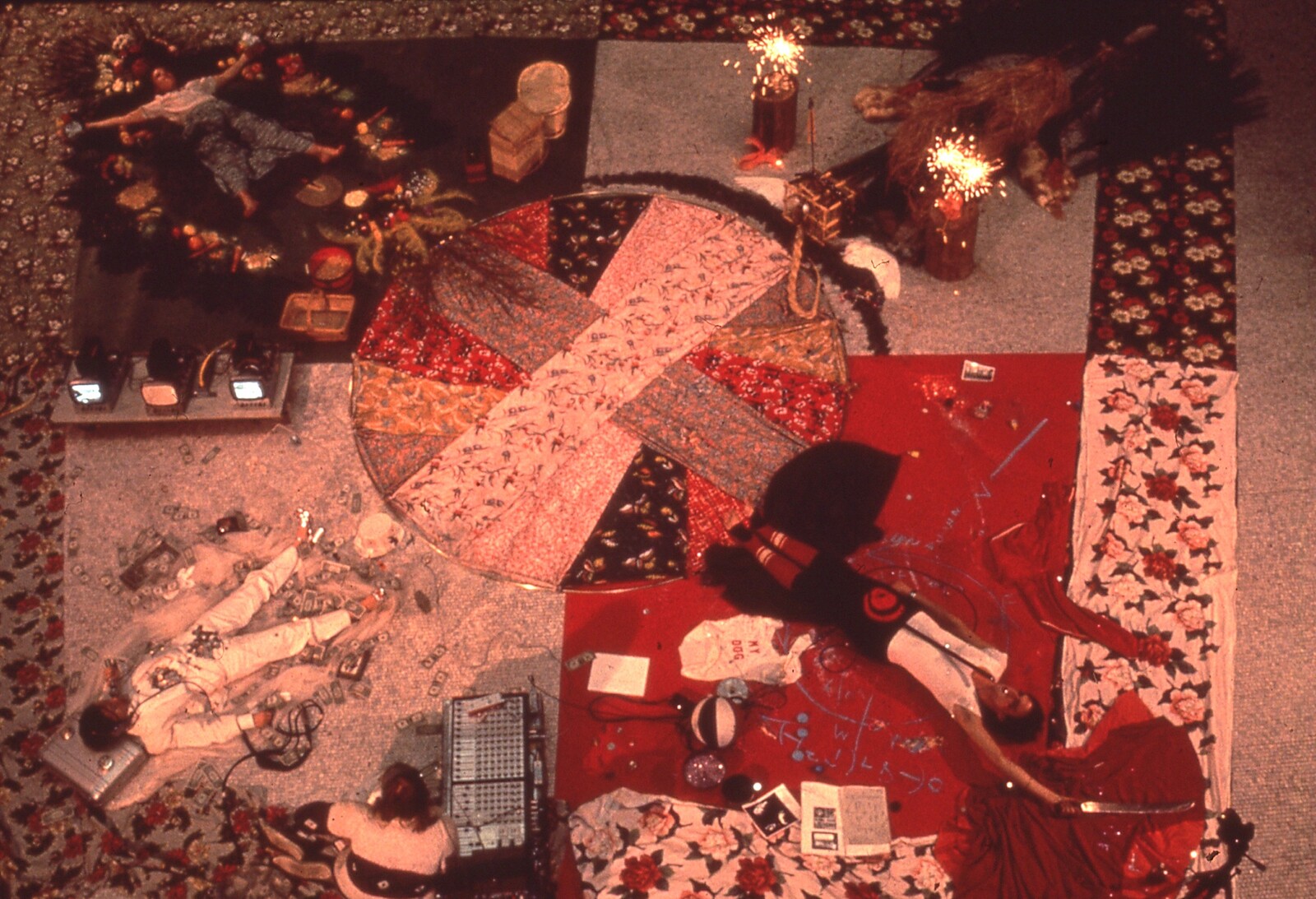
That said, I like this biennial. The group exhibitions, which vary in quality—Abstraction being the strongest and Death by Gun (predictably?) being the weakest—are generally good, tightly curated, museum-like shows in themselves. If Death by Gun felt a bit sophomoric at times, what with Kris Martin’s massive pile of ornamentally reworked howitzer shells from World War I, then Abstraction was full of provocative juxtapositions, like the decision to couple a photo of the back of a white target full of bullet holes by Annette Kelm next to an aerial photo of a group children whose heads emerge from a vast and unified white piece fabric by Lygia Pape.

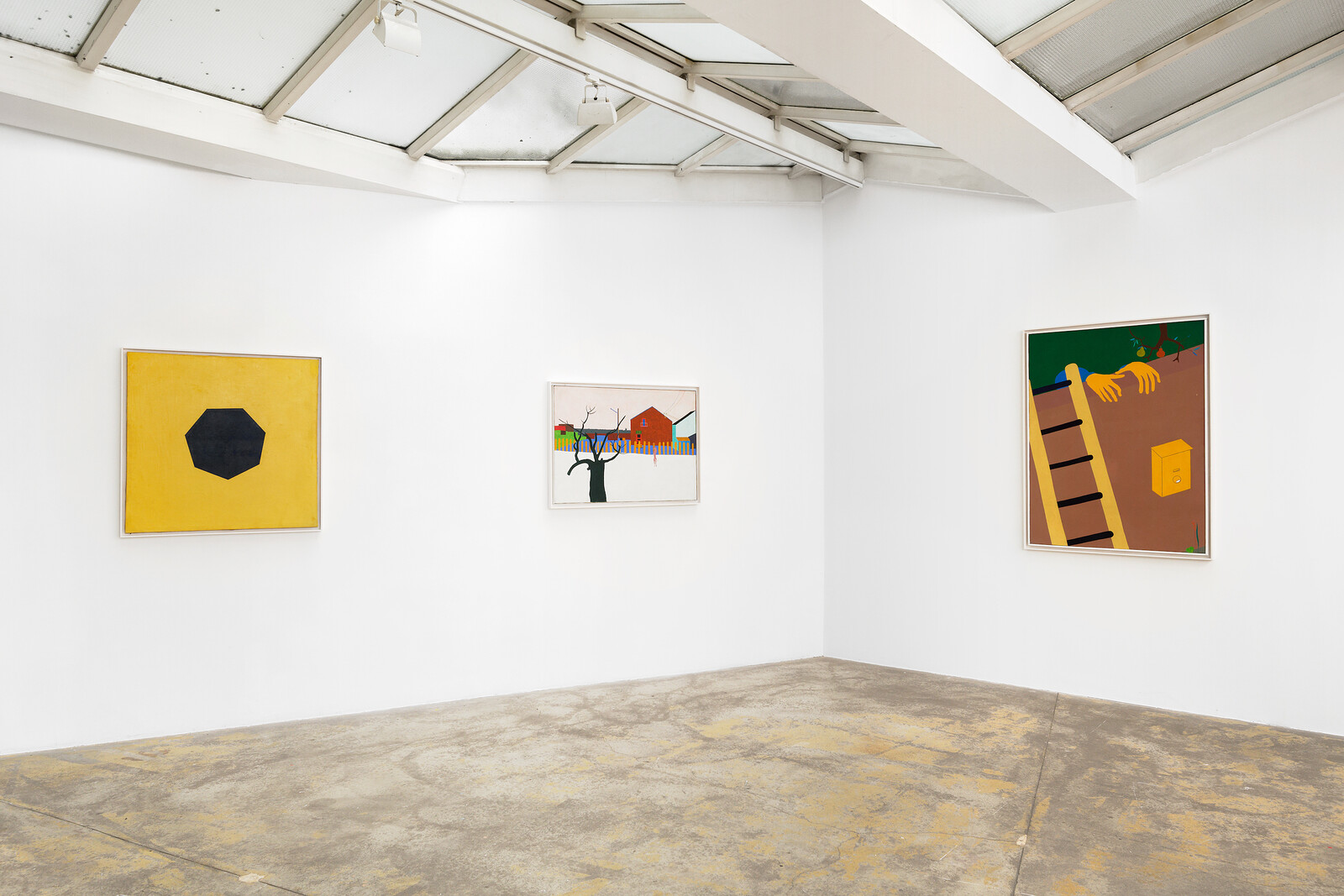
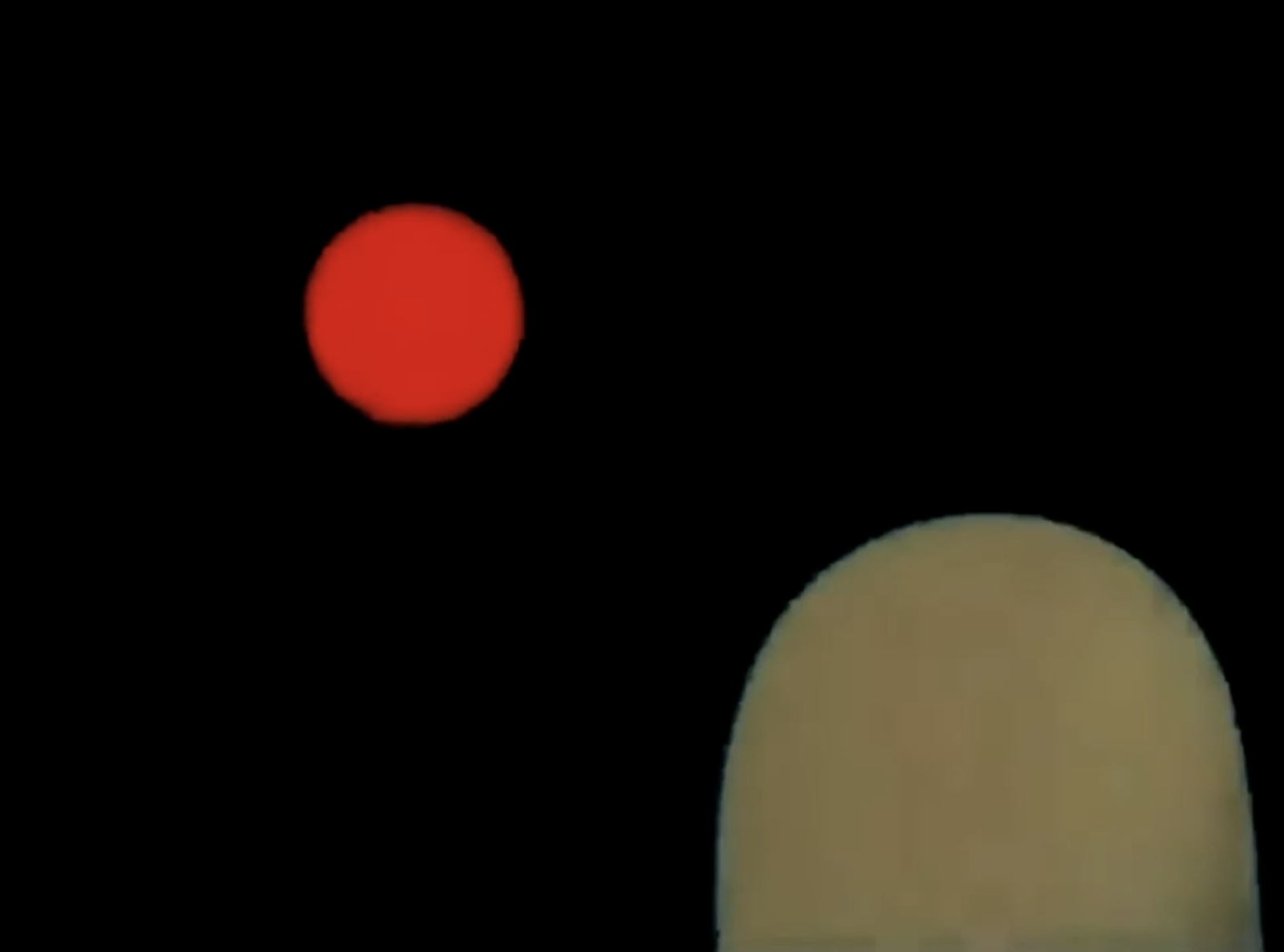
There is a lot of great art in this biennial, which was largely dominated by Latin American and Middle Eastern artists. More memorable discoveries included the Brazilian artist’s Leonilson’s small-framed textiles, the Turkish artist Füsen Onur’s sculptures and delicate paintings, the aforementioned Dóra Maurer’s conceptual photos and drawings—who, born in 1937, is destined here to become the equivalent of Documenta 12′s Jiří Kovanda—as well as the Turkish photographer Yilduz Moran Arun’s black-and-white photos of everyday life in Turkey in the 50s. Some of the more memorable younger artists included the Colombian artist Gabriel Sierra’s conceptual sculptures involving fruit, the Englishman Simon Evans’s winsomely vulnerable text collages, the Portuguese Francisco Tropa’s installation of two bronze skeletons with a slide projection of a single “live” flickering feather, as well as Zarouhie Abdalian’s vibrating room sound installation, among many others.

Finally, I like that this is a formal biennial. And although I have doubts about the conceptual underpinnings and referential origins of that formalism, I am convinced of its necessity. It is difficult not to see such formalism as symptomatic of a general disenchantment with biennial conventions. Indeed, it is to be hoped that the essentially conservative, museum-like nature of this biennial will lead to an active, rather than theoretical re-evaluation of those conventions. Against the well-worn biennial extreme of politics and political responsibility before formal considerations, it is as if the curators have swung to the other extreme. It will be interesting to see where that extreme leads us.

Chris Sharp is a writer and independent curator. He is editor at large of Kaleidoscope magazine.

Leave a Comment

Martha Rosler, Balloons, from the series, "Bringing the War Home: House Beautiful," 1967–72.

1Martha Rosler, Balloons, from the series, "Bringing the War Home: House Beautiful," 1967–72.

Letizia Battaglia, Palermo, 1982. Nerina worked as a prostitute. She and her two friends were murdered by the mafia for not respecting their rules, 1982.

2Letizia Battaglia, Palermo, 1982. Nerina worked as a prostitute. She and her two friends were murdered by the mafia for not respecting their rules, 1982.

Abraham Cruvillegas, Ink & Blood, 1968–2009, 2008–9.

3Abraham Cruvillegas, Ink & Blood, 1968–2009, 2008–9.

Tina Modotti, Woman with Flag, ca.1928.

4Tina Modotti, Woman with Flag, ca.1928.

Dóra Maurer, Hidden Structures Series I. 3–4, 1977.

5Dóra Maurer, Hidden Structures Series I. 3–4, 1977.

Renata Lucas, Failure [Falha], 2003.

6Renata Lucas, Failure [Falha], 2003.

José Leonilson, Empty man, 1991.

7José Leonilson, Empty man, 1991.

Lygia Pape, Divisor, 1968-85.

8Lygia Pape, Divisor, 1968-85.

Füsun Onur, Untitled, 1968.

9Füsun Onur, Untitled, 1968.

Yıldız Moran Arun, Filter, 1955.

10Yıldız Moran Arun, Filter, 1955.

Gabriel Sierra, Untitled (Support for mathematics lesson) [Sin titulo (soporte para lección de matemáticas], 2007.

11Gabriel Sierra, Untitled (Support for mathematics lesson) [Sin titulo (soporte para lección de matemáticas], 2007.

Simon Evans, Survival, 2010.

12Simon Evans, Survival, 2010.

Francisco Tropa, Giant [Gigante], 2006.

13Francisco Tropa, Giant [Gigante], 2006.

Zarouhie Abdalian, Set for the Outside, 2010.

14Zarouhie Abdalian, Set for the Outside, 2010.

  • 1Martha Rosler, Balloons, from the series, "Bringing the War Home: House Beautiful," 1967–72. Courtesy of Galerie Christian Nagel, Cologne/Berlin and Mitchell-Innes & Nash, New York.
  • 2Letizia Battaglia, Palermo, 1982. Nerina worked as a prostitute. She and her two friends were murdered by the mafia for not respecting their rules, 1982.
  • 3Abraham Cruvillegas, Ink & Blood, 1968–2009, 2008–9. Courtesy of Kurimanzutto Gallery, Mexico City. Photo by Pelin Derviş.
  • 4Tina Modotti, Woman with Flag, ca.1928. Courtesy of Throckmorton Fine Art, New York.
  • 5Dóra Maurer, Hidden Structures Series I. 3–4, 1977. Photo by Miklós Sulyok.
  • 6Renata Lucas, Failure [Falha], 2003.
  • 7José Leonilson, Empty man, 1991. Courtesy Família Bezerra Dias, São Paulo. Photo by Eduardo Brandão.
  • 8Lygia Pape, Divisor, 1968-85. 2,000 cm x 2,000 cm. Performance. Photo by Paula Pape.
  • 9Füsun Onur, Untitled, 1968.
  • 10Yıldız Moran Arun, Filter, 1955. Courtesy of Olgun Arun.
  • 11Gabriel Sierra, Untitled (Support for mathematics lesson) [Sin titulo (soporte para lección de matemáticas], 2007. Courtesy of Luisa Strina São Paulo and Casas Riegner, Bogotá.
  • 12Simon Evans, Survival, 2010. Private collection. Photo by Eduardo Ortega.
  • 13Francisco Tropa, Giant [Gigante], 2006. Bronze. Courtesy of Galeria Quadrado Azul, Portugal. Photo by Pedro Tropa & Teresa Santos.
  • 14Zarouhie Abdalian, Set for the Outside, 2010.
Deweer
Air the paris
Luisa Strina
Friedrich Petzel
Brooklyn Rail
Art Monthly
Magazine Mousse
Kaleidoscope
Hilger
Xavier Hufkens
Gallery Ernst Hilger
Carolina Nitsch
Peres projetcs